Dream sequence guide · checked October 23, 2026
Tomodachi Life Dreams Guide: Triggers, Rewards, and Nightly Tips
Tomodachi Life dreams are short, random scenes that turn a sleeping Mii into a small island event. Look for the dream bubble, open the sequence, and treat the reward as a useful bonus rather than a guaranteed way to farm one exact item. This guide explains the trigger, the most useful dream categories, fixed versus variable rewards, and a practical sweep you can repeat without downloading files.

Find the bubble first
A sleeping Mii with a visible dream bubble is the reliable entry point. There is no normal menu that lets you select any dream on demand.
Read rewards as clues
Some sequences point to a recognizable item while others use whatever object appeared in the scene. Keep a note of what your own game gives you.
Keep versions separate
Original 3DS notes and Living the Dream observations may not describe the same sequence or reward.
Quick answer: how do Tomodachi Life dreams work?
A dream begins when a sleeping or napping Mii shows a dream indicator above an apartment or home. Open it to watch a short passive or interactive scene. The game chooses the sequence, and an item may follow when it ends. Check several residents, open each visible bubble, and record useful rewards; no guide can promise one named dream every night.
-
1. Check the title and version
Decide whether your reference is the original Nintendo 3DS Tomodachi Life or Tomodachi Life: Living the Dream on Nintendo Switch. Community names and reward notes can mix the two.
-
2. Find a sleeping Mii
Visit apartments or homes during a nap or night cycle. Look for the dream bubble rather than assuming every sleeping resident is currently dreaming.
-
3. Open and watch the sequence
Tap the indicator and follow any clear prompt. A passive scene is still a complete dream; you do not need to treat it like a competitive mini-game.
-
4. Record the result
Write down the dream theme, the resident, and the item that appeared afterward. Your own save is stronger evidence than an uncited list that mixes releases.
Tomodachi Life dream sequence types
Dreams recur as visual jokes, conversations, chases, food or object scenes, and small interactions. Names vary by release and language, so record what happens as well as the nickname. This table is a recognition aid, not a complete catalog.
| Dream shape | What you may see | How to use the clue |
|---|---|---|
| Object or food focus | A resident talks about, wears, drops, or is surrounded by an item | Watch the featured object because it may explain the reward. |
| Sleepy counting or routine | A calm repeated action such as counting or waiting | Treat it as a passive scene; there may be no skill check. |
| Race, jump, or fall | Miis move through a short obstacle or race setup | Follow the prompt when one appears, but do not assume speed changes the final item. |
| Conversation or social joke | Two or more Miis trade lines, reactions, or a strange claim | Save the scene description if you are building a spoiler-light dream log. |
| Fantasy transformation | A resident grows, flies, changes appearance, or enters a dramatic setting | Use the visual change to identify the category when titles differ. |
| Variable object scene | Several objects appear and one becomes the focus | Record the object you actually received instead of copying a universal list. |
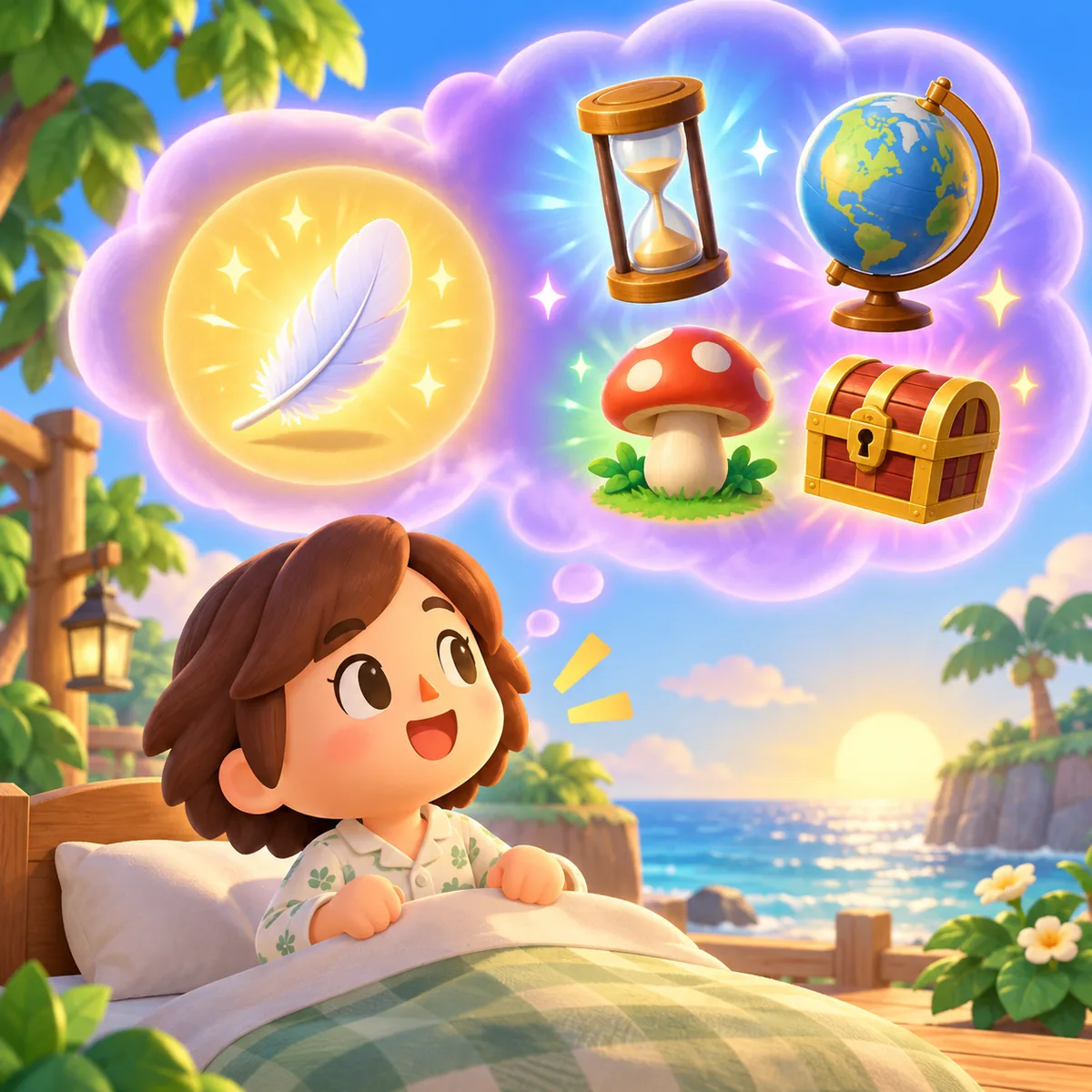
Fixed rewards versus variable rewards
A fixed-style reward repeats in the same game context; a variable one follows the object or food shown in that scene. Guides may disagree when they mix titles or omit version details. Compare the release and whether early exit is covered, then log the item your own game gives you. A different result does not by itself mean the save is broken.
A practical nightly dream sweep
You cannot select a specific dream, but a calm sweep can help you notice more bubbles. Check apartments and homes, handle urgent problems, then make one final pass before stopping. More residents mean more places to inspect, not a guaranteed spawn rate. Avoid repeated resets or claims about a magic time window.

-
Check at a quiet time
Begin when several residents are likely to be resting. The exact clock behavior can vary by title and save, so use your own play schedule as the guide.
-
Sweep every building
Move through the apartment and home areas instead of checking only a favorite Mii. A broad sweep creates more chances to see a bubble.
-
Open the dream before shopping
Handle visible dream bubbles before spending the session in shops or menus. This keeps a short play window focused on the event you came to find.
-
Keep the island moving
Feed residents, solve problems, and maintain normal activity. These actions do not guarantee a dream, but they keep the simulation useful between checks.
-
Return once before quitting
A second quick apartment pass can catch a resident who fell asleep later. Stop when the sweep is complete; repeated resets add noise without proving a hidden method.
How dreams connect to items without replacing the item guide
A dream may give an item, but this page is not a complete item catalog. Use it to identify the scene and notice more events; use the items guide for shops, seasonal stock, gifts, treasures, and custom creations. Treat a reward as an observation before turning it into a farming target, and compare dated sources when a specific drop rule matters.
Original Tomodachi Life versus Living the Dream
Dream searches mix the original Nintendo 3DS game with Tomodachi Life: Living the Dream on Switch. Names, sleep behavior, rewards, and screenshots may belong to different releases. Check the console, language, date, and source. A 3DS list can be useful history without proving the Switch version matches. Use Nintendo for platform and update facts, and label community observations by title.
| Question | Safer reading | What not to assume |
|---|---|---|
| Is this a 3DS dream? | Check the device, title, and source date. | A community nickname automatically applies to Switch. |
| Is this a Living the Dream dream? | Look for Switch-specific context and a current source. | A 3DS clip proves the new title has the same scene. |
| Does the reward match? | Record the item in your own release. | One uncited list is a universal drop table. |
| Can I update from a dream guide? | Use Nintendo's official update path for software facts. | A dream list or APK page is an official update source. |
Dream lists, spoilers, and safe research boundaries
A full list can help with completion, but it may spoil the jokes. Start with categories and open detailed lists only when needed. A screenshot proves one scene, not every platform rule. The normal loop needs no download; leave pages that demand an APK, ROM, save archive, executable, or unrelated permissions to reveal dream information.
Summary: use dreams as island events
Look for a sleeping Mii with a dream bubble, open the sequence, and note what happened. A broad sweep helps you notice more events, while a short log separates fixed-style clues from variable rewards. Keep 3DS and Switch notes distinct, and use the related guides when your question moves beyond dreams. No download is needed.
Related Tomodachi Life Guides
Items Guide
For shops, gifts, treasures, custom creations, and seasonal stock.
Read the items guideApartments Guide
Organize a sweep across apartments and homes.
Review apartmentsLiving the Dream Guide
Check Switch-era platform and official-source facts.
Open the game guideMusic Guide
Identify music or performance cues in a scene.
Read the music guideFood Guide
Review food shops and Mii reactions.
Open the food guideAPK Safety Checklist
Check APK, ROM, save-file, or installer claims.
Check download safetySources and verification boundaries
Use official pages for platform facts and community guides as version-specific observations.
Nintendo product information
Official product context for Tomodachi Life: Living the Dream on Nintendo Switch.
Open Nintendo sourceDream guide reference
A current guide used to compare trigger wording, categories, and reward explanations; verify its release scope before copying a full list.
Open guide referenceCommunity dream reference
A community wiki reference for older and newer dream terminology. Treat it as an observation archive, not an official drop table.
Open community referenceTomodachi Life Dreams FAQ
How do you trigger a dream in Tomodachi Life?
Visit a sleeping or napping Mii and look for the dream indicator above the apartment or home. Open the visible bubble to enter the sequence. The game chooses the exact dream, so you can improve your chances by checking more residents but cannot normally select any scene on demand.
Do dreams give you rewards?
A dream can give an item connected to the scene when it ends. Some guides describe fixed-style rewards and others describe variable rewards based on the object shown. Record what your own release gives you and keep the title and date with the note.
Can you choose a specific Tomodachi Life dream?
Do not assume that you can choose one exact dream from a normal menu. Dreams are generally selected by the game. A larger island and regular checks create more opportunities, but they do not prove a guaranteed method for a rare scene.
Are Tomodachi Life dreams the same on 3DS and Switch?
Not automatically. The original Tomodachi Life and Tomodachi Life: Living the Dream use different platform contexts, and community lists can mix their names and rewards. Check the title, console, source date, and visible interface before treating a dream note as cross-version evidence.
How do I see more dreams in one session?
Check sleeping residents at a quiet time, sweep all apartments and homes, open each visible dream bubble before shopping, keep normal island activity moving, and make one final pass before quitting. This improves coverage without promising a hidden spawn rate.
Is there a Tomodachi Life dream list or dream APK?
A list can be a text guide, but a dream APK, ROM, save archive, NSP/XCI file, or unlock installer is not needed for normal dream events. Treat download pages that promise all dreams or rewards as a separate safety issue and use official platform sources instead.
Is a dream reward a guaranteed farming method?
Do not assume a sequence guarantees one exact item across every title or save. Record your result and check whether a source is describing a fixed-style or variable reward.